D-Day and Operation Overlord
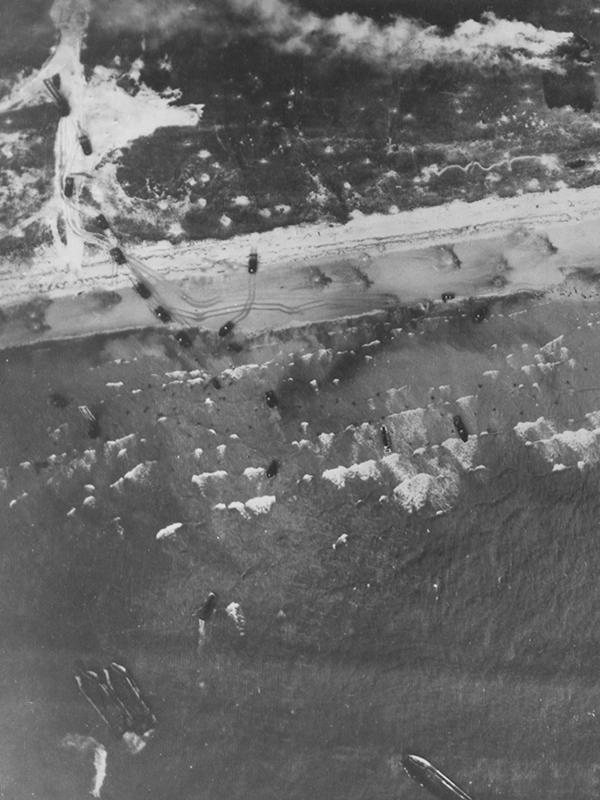
Half a year before D-Day took place, COPP men Logan Scott-Bowden and Bruce Ogden Smith swam ashore onto first Gold beach and then Omaha beach (twice) to probe the enemy defences and take soil samples.
Then on D-Day itself, COPP used two X-craft midget submarines to act as light beacons, marking the way towards Juno Beach and Sword Beach for the assault force. Other COPP teams were in the first-wave of landing craft as they headed in, spearheading the liberation of Europe.
Find out about D-Day and Operation Overlord
Pioneering days
Find out about Pioneering days
COPP in the Mediterranean
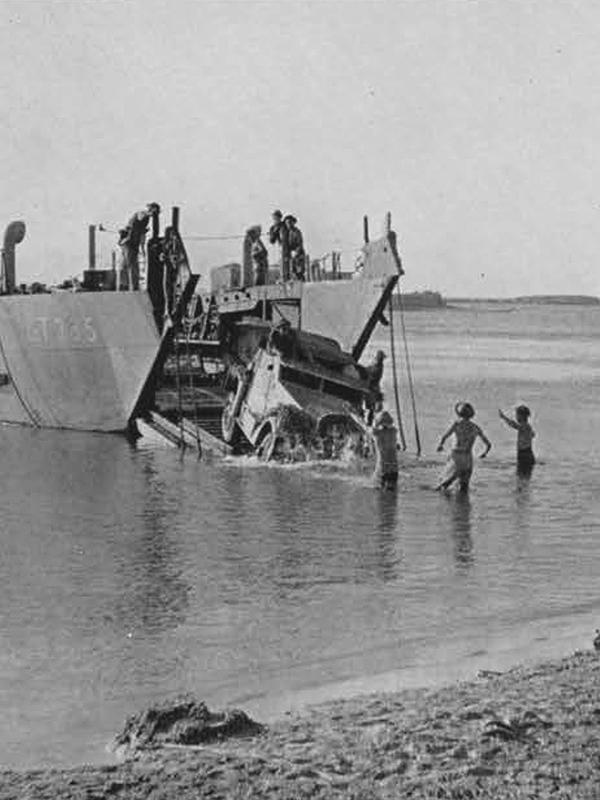
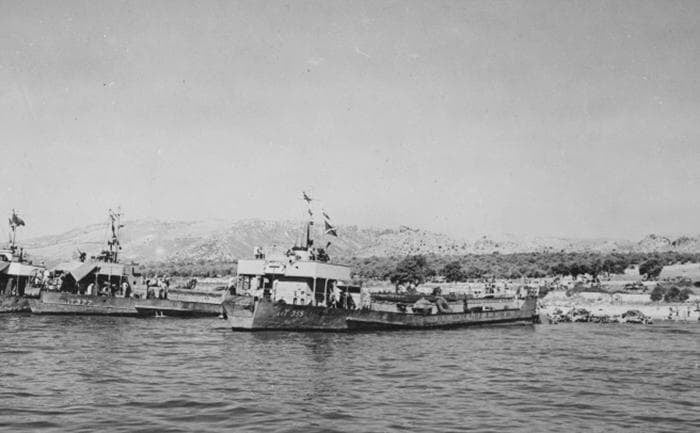
Thrown into service too soon to carry out reconnaissance of Sicily, the first COPP teams in the Mediterranean suffered heavy losses.
But once training was properly established, COPP teams went on to serve with distinction during all the major landings on Sicily, at Salerno and at Anzio.
Teams also supported numerous small-scale amphibious in the Adriatic and the Aegean Sea.
Find out about COPP in the Mediterranean
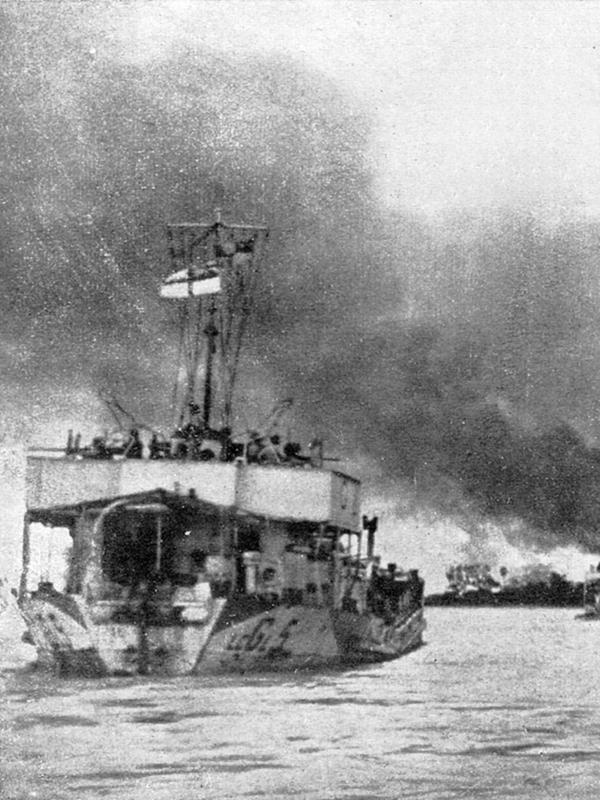
Service in South-East Asia
Find out about Service in South-East Asia
Post-war
One of our trustees, Rob Crane, is uploading his extensive and ongoing research onto his COPP Survey website. For more in-depth coverage of COPP, its men and its equipment, please visit.
D-Day and Operation Overlord
COPP played a key role in the D-Day landings – not just on 6 June 1944 but in the months leading up to it.
Of all COPP’s wartime operations, its ones for the D-Day landings are the best known. Many people have heard that two Commandos who slipped onto the Normandy beaches before the invasion to take sand samples, or that two X-craft midget submarines waited off the French coast to guide in the invasion fleet.
Yet people who have heard the stories often still don’t asssociate them with COPP.
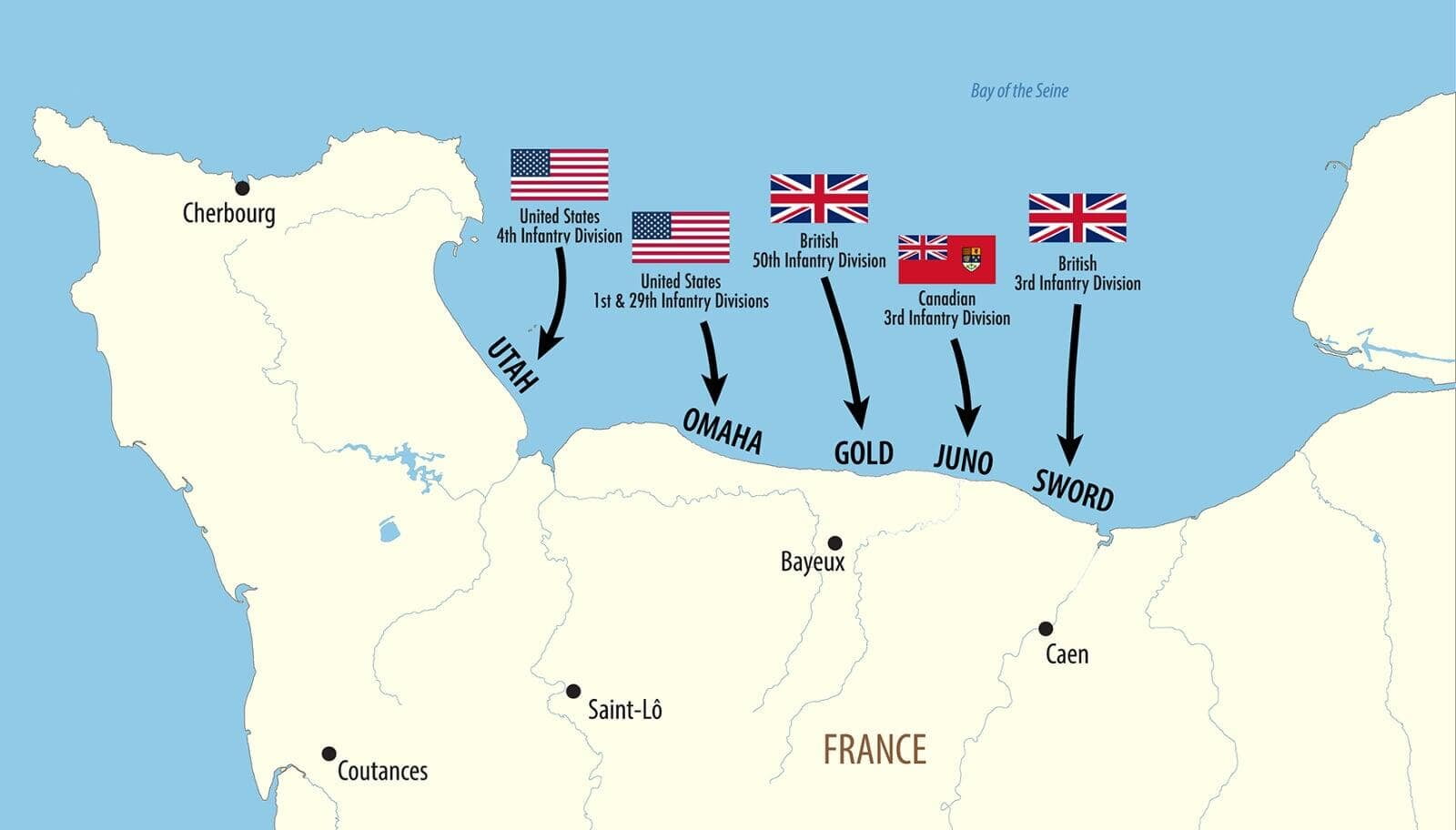
In fact COPP’s role was far bigger than those two stories suggest, with only the Americans’ Utah sector not benefitting from COPP work either on the day of the landings or during the earlier planning phase.
- Omaha beach received reconnaissance and pilotage.
- Gold beach received reconnaissance only.
- Juno beach received pilotage and beach marking.
- Sword beach received pilotage and beach marking.
Select each of the following items to find out more.
X-23 on D-Day
While midget submarine X-20 marked Juno beach on D-Day, X-23 marked Sword beach.
COPPists Geoffrey Lyne and Jim Booth joined regular X-craft men George Honour, Jimmy Hodges and George Vause.
D-Day's postponement by 24 hours because of bad weather meant they had to sit on the bottom off Sword beach for an additional day.
The atmosphere inside an X-craft was repugnant at the best of times, but almost 24 hours without being able to ventilate made it even worse than usual.
Finally, after completing her beach marking role, X-23 was able to come alongside HQ ship HMS Largs.
The visionary
Nigel Clogstoun-Willmott was born in India in 1910. After educating at Marlborough College, he commissioned into the Royal Navy as a Sub-Lieutenant in 1932.
He completed his training as a navigating officer in 1937 and joined the sloop HMS Wellington, serving in her in the South Pacific until the outbreak of war.
After steering Wellington home to the UK after war was declared, Clogstoun-Willmott transferred to destroyer HMS Faulknor. He served in her throughout the Norwegian campaign.
By late 1940 Clogstoun-Willmott was navigating officer in cruiser HMS Glasgow when it was badly damaged by an Italian torpedo-bomber while at anchor off Crete. Glasgow’s crew limped her back to Alexandria in Egypt where she entered dock for extensive repairs.
This is when Clogstoun-Willmott joined the Combined Operations staff in Cairo. Appointed to work with Rear Admiral Tom Baillie-Grohman, little did Clogstoun-Willmott know he’d soon play a pivotal role in transforming the Royal Navy's planning for amphibious operations.
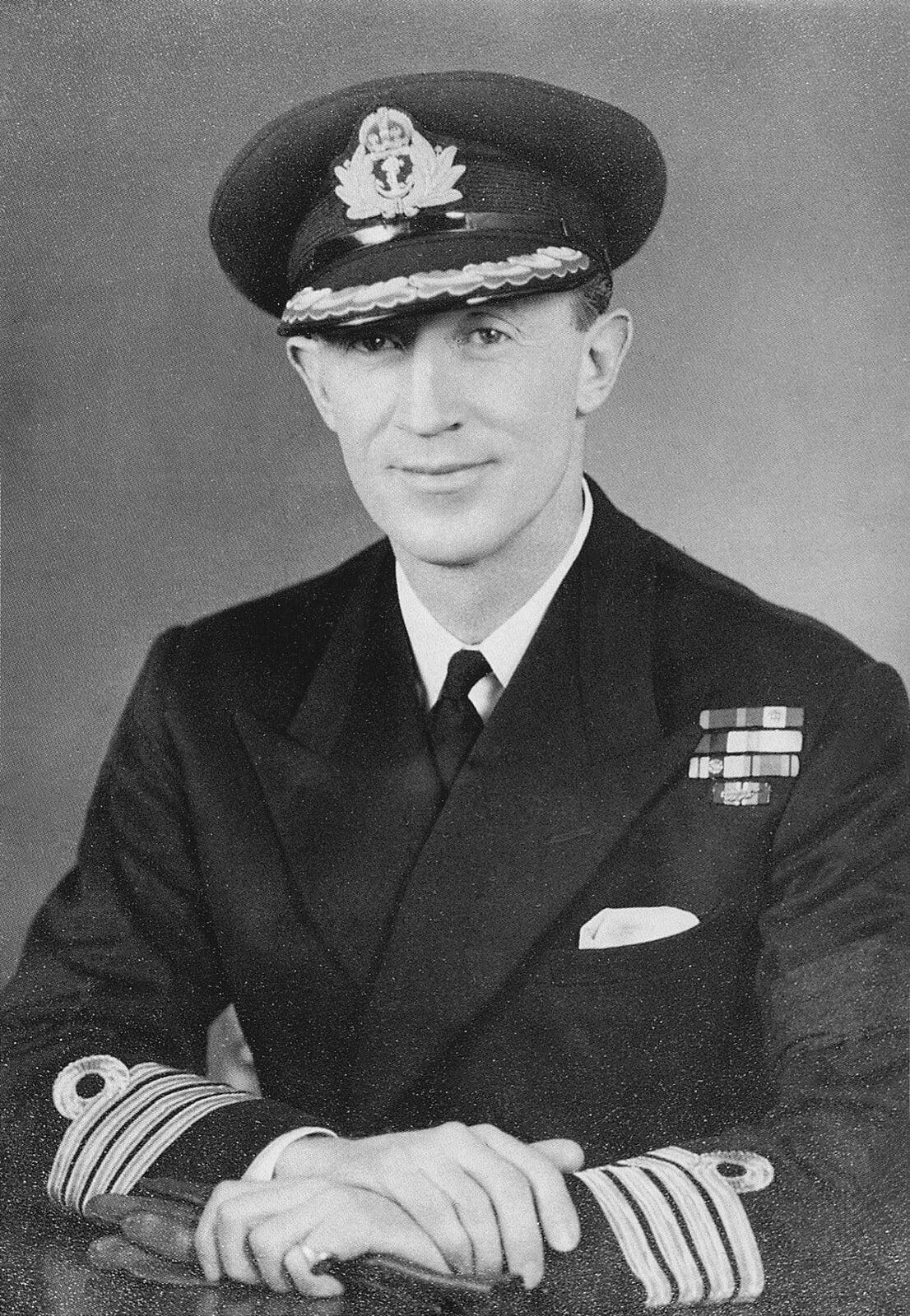
“It seemed to me that it would be a disaster if we didn’t know where we were. And we wouldn’t have, because the charts [of the Rhodes coast] were wrong by at least a mile.
“They also didn’t know what the beaches were like. They might be rock shelves or they might be a false beach, with a bar on which the landing craft would debouch and out would come the tanks, then it would get deeper instead of shallower as they went in."
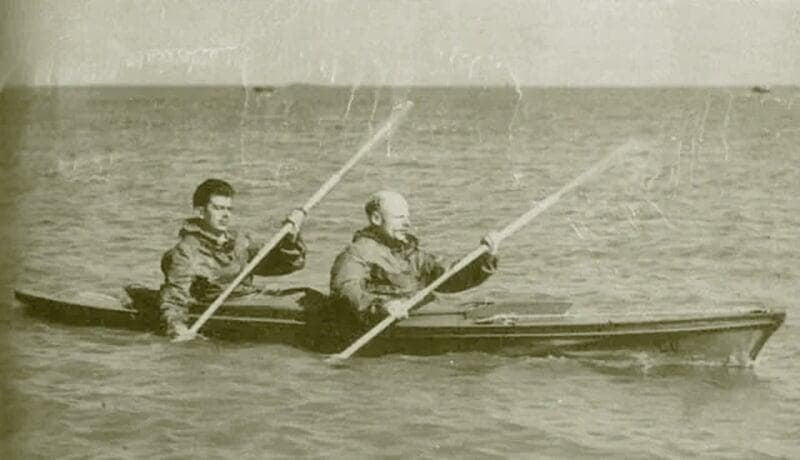
Worried by the lack of reliable information about the Rhodes coast, Clogstoun-Willmott secured permission to join Roger Courtney for hands-on reconnaissance. Courtney had just a few months previously founded the Army Commandos’ Special Boat Section (SBS), which used canoes for its operations. He was already in Egypt with the force assembled for the planned Rhodes invasion.
Together they developed new techniques, including how a swimmer could clamber back into a canoe after completing his swim, and how to cross a pebbly beach without alerting sentries.
Then they took submarine HMS Triumph to sea and put the techniques into practice. In late March and early April 1941, Clogstoun-Willmott swam ashore on two successive nights; Courtney followed on the third. Legend has it that on one of his nights, Willmott even crawled into the grounds of the Axis headquarters (in the modern-day Casino Rodos) just behind one of the beaches.
The reconnaissance paid off. Clogstoun-Willmott found a sandbar close to one beach, while another beach earmarked for tank landings proved unsuitable.
But the mission’s discoveries were overtaken by events: soon after the reconnaissance ended, the Rhodes invasion was cancelled so that Allied forces could be evacuated from Greece instead.
Heavy losses in early Sicily operations
The first two COPP teams to be called for duty were both led by veterans of Party Koodoo–Inhuman:
- COPP 3 – led by Norman Teacher
- COPP 4 – led by Neville McHarg
Deprived of the chance to train properly in the UK, they improvised training routines as best they could.
But crucially, they lost the chance to practise homing to the submarines that would carry them and their canoes from Malta to Sicily.
Content currently being prepared.
Post-war
Although COPP was disbanded at the end of the Second World War, the work it did was soon taken up by a new unit.
In South-East Asia, COPP was part of the Small Operations Group (SOG), whose second-in-command was legendary Royal Marines officer Herbert ‘Blondie’ Hasler. Hasler had earlier in the war conceived and led the Royal Marines’ famous Cockleshell Heroes raid on shipping in Bordeaux harbour.
But Hasler was allowed to retain a small number of staff from officers within SOG, including COPP’s Alex Hughes. After returning to the UK they set up the School of Amphibious Warfare to keep alive the ‘small boat’ skills and expertise that they had gained during the war.
Additional photo credits for this page: Adobe Stock, Australian War Memorial, Jack Crane family, McMaster University, National Archives and Records Administration (NARA)